Let’s start with a truth every education professional knows but rarely says out loud:
You can love your job and feel completely deflated by it.
Whether you’re a headteacher juggling strategy and safeguarding, a lecturer spinning ten plates before lunch, or a TA who somehow manages to be everywhere at once in education, it doesn’t just ask for your time; it quietly borrows your emotional energy and somehow… it follows you home.
That’s where supervision comes in. Not the “are you meeting your targets?” kind. The real kind. The human kind.
So… what is supervision (and why should you care)?
Think of supervision as your professional pit stop.
Not a performance review.
Not another meeting that could’ve been an email.
But a protected space to pause, reflect, offload, and reset.
It’s where you get to say:
- “This week was a lot.”
- “I’m not sure I handled that conversation well.”
- “I’m exhausted and I don’t know why.”
And instead of fixing everything instantly, supervision helps you understand it.
Enter the GROWTH Model
You may have heard of the GROW model, but let’s stretch it a little for educational life and call it GROWTH, because let’s be honest, we’re always expected to go the extra mile.
- G – Goal: What do you actually need right now? (Hint: it might not be “finish marking.”)
- R – Reality: What’s really going on—for you, your team, your students?
- O – Options: What could you do (that doesn’t involve cloning yourself)?
- W – Way Forward: What’s one realistic step you’ll take?
- T – Time: When will you protect time for it?
- H – Headspace: How will you look after yourself while doing it?
Because growth isn’t just about outcomes, it’s about sustainability.
Whole-school impact
When supervision is embedded across a whole school or college, something shifts:
- Senior leaders stop carrying everything alone
- Teachers feel heard, not just observed
- TAs gain a voice in the bigger picture
- Teams communicate better (and complain less in the staffroom…)
It creates a culture where reflection is normal, not a luxury squeezed in between duties.
Hometime for staff?
Here’s the magic part.
When you have space to process your work at work, it’s less likely to spill into your evenings.
That means:
- Fewer wake-up calls at 2 am with mental replays asking if I’ve got everything ready for the next day.
- Less Sunday dread creeping into Saturday night
- More presence with family, friends or just yourself and a cup of tea
Supervision helps you draw a line between caring deeply and carrying everything.
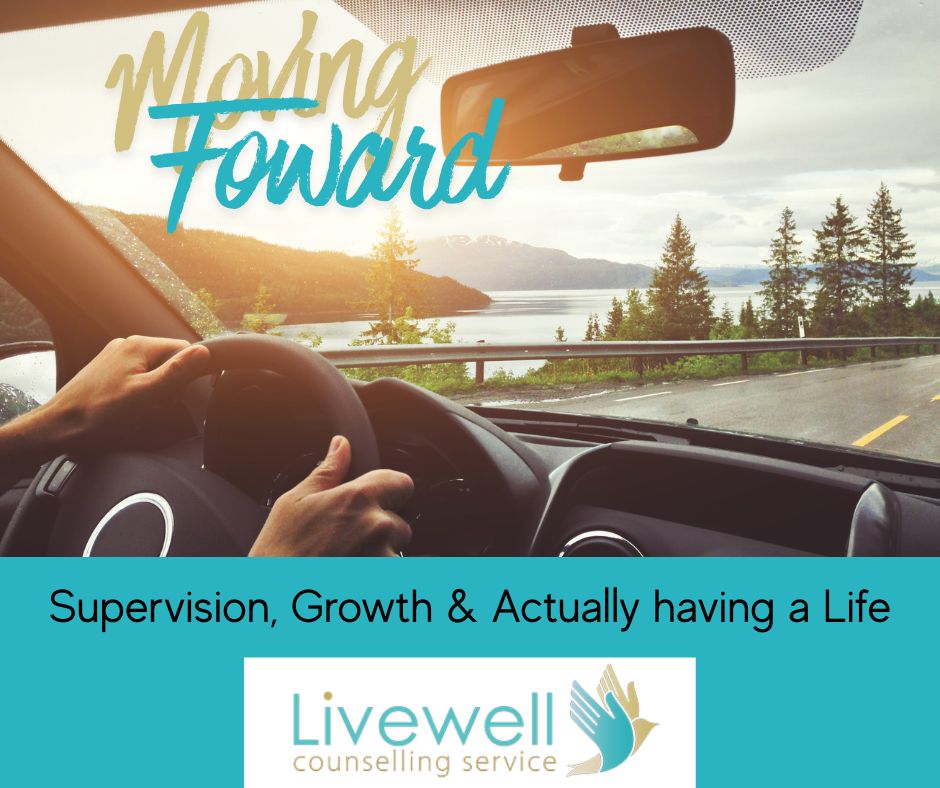
🚗 Moving forward (without burning out)
If education is a long road (and it is), supervision is what keeps the engine running smoothly.
It won’t remove every bump in the road.
But it will make sure you’re not driving it on empty.
So whether you’re leading a school, teaching a class, supporting a learner, or holding everything together behind the scenes to remember:
You don’t have to do it all alone.
And you definitely don’t have to take it all home.
Livewell Counselling Services
Supporting the people who support everyone else