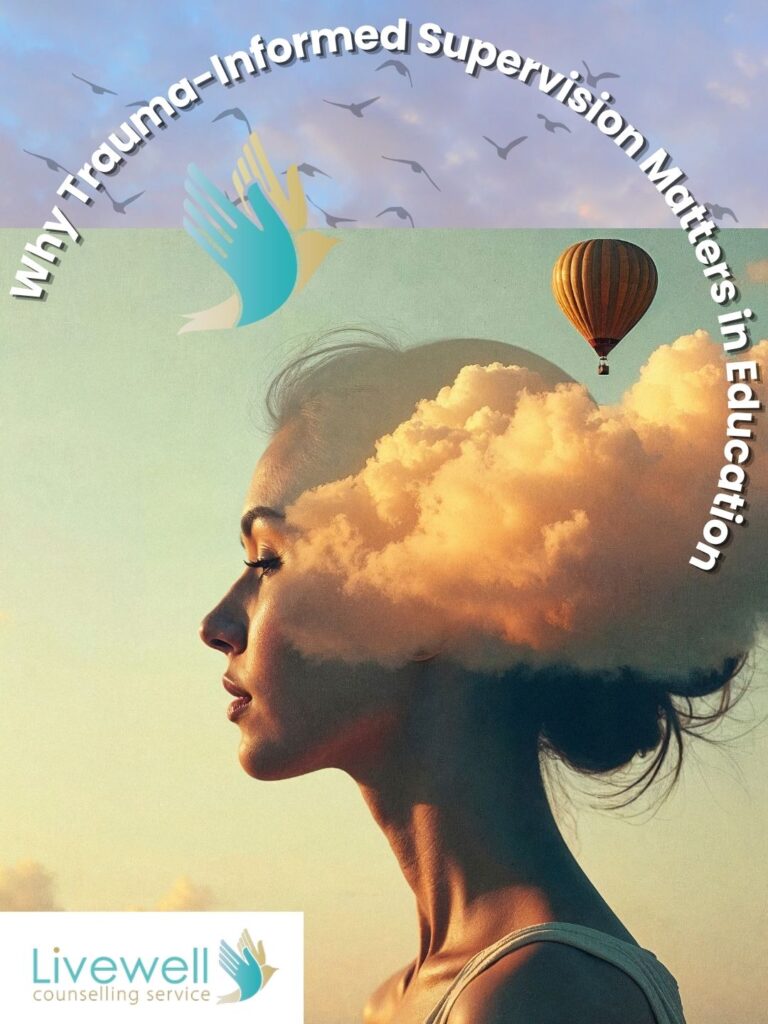
Education professionals are increasingly working with children and young people whose experiences extend far beyond the classroom.
Whether it’s anxiety, family difficulties, loss, neglect, adverse childhood experiences, or safeguarding concerns, staff are often supporting young people carrying significant emotional challenges. Whilst much of the focus is rightly placed on the child, less attention is sometimes given to the impact this work can have on the adults supporting them.
Trauma-informed supervision recognises that behaviour is often a form of communication. It helps professionals move beyond asking, “What’s wrong with this child?” and instead consider, “What might this child have experienced?”
This perspective can be incredibly valuable for staff working in education. It encourages curiosity, compassion, and understanding, whilst also providing a space to reflect on the emotional impact of the work itself.
For those in safeguarding, pastoral, SEND, wellbeing, and leadership roles, some experiences can stay with you long after the school day has ended. Having a dedicated space to process these experiences is not just beneficial for staff wellbeing; it also supports clearer thinking, better decision-making, and more sustainable practice.
A trauma-informed supervisor brings an additional layer of understanding to these conversations. With specialist knowledge of trauma and approaches such as EMDR, they can help professionals make sense of complex situations, recognise patterns, and reflect more deeply on what they are seeing and experiencing.
At Livewell Counselling Service, we believe supervision should be more than a discussion about workload or processes. It should be a reflective, supportive space that acknowledges the realities of working with vulnerable children and young people.
Because when staff feel supported to understand both the impact of trauma and the impact of supporting those affected by it, they are better equipped to continue the important work they do every day.